Saturday, June 20, 2026

What Is GEO and Why Your Pune Business Needs It in 2026


What Is GEO (Generative Engine Optimisation) and Why Your Pune Business Needs It in 2026

GEO (Generative Engine Optimisation) is the practice of structuring your website and content so AI tools like Google AI Overviews, ChatGPT, and Perplexity can understand, trust, and cite your business when answering a user's question. Where traditional SEO competes for a position on a results page, GEO competes for a mention inside an AI-generated answer — often before the user ever clicks through to a website.

For Pune businesses, this shift isn't a future trend to plan for. It's already changing how local customers find manufacturers, consultants, clinics, real estate developers, and service providers across the city.

Why GEO Matters Now

Search behaviour has quietly changed over the past two years. A growing share of queries — from "best SEO company in Pune" to "GMP certified herbal toothpaste manufacturer" — now return an AI-generated summary before any traditional blue links appear. Increasingly, users read that summary, get their answer, and never visit a website at all.

This means a business can rank well in traditional Google search and still be invisible in the moment that actually decides where the customer goes next — the AI answer itself.

GEO is how a business earns a place inside that answer.

How GEO Is Different from Traditional SEO

Traditional SEO

GEO

Optimises for ranking position

Optimises for being cited or quoted

Keyword-driven content

Entity- and answer-driven content

Backlinks signal authority

Structured data + backlinks signal authority

Success = clicks

Success = visibility, even without a click

Built for search engine crawlers

Built for both crawlers and AI language models

GEO doesn't replace SEO — it sits on top of it. A technically sound, well-structured website is still the foundation. GEO simply adds a second layer: making that content legible and trustworthy to AI systems, not just search engines.

How AI Engines Actually Decide What to Cite

AI tools don't "browse" the web the way a human does. They lean on a few specific signals to decide which businesses are credible enough to mention:

  • Structured data (schema markup): Organisation, Service, FAQ, and Product schema help AI systems understand exactly what a business does, where it operates, and what makes it credible — without guessing from unstructured text. Use this tool for generating schema markup
  • Direct-answer content: Pages that open with a clear, well-formed answer to a likely question are far easier for AI to extract and quote than pages that bury the point under marketing copy.
  • Entity consistency: Your business name, address, services, and credentials need to match consistently across your website, Google Business Profile, directories, and social profiles. Inconsistency confuses both search engines and AI models.
  • Topical depth: A handful of thin pages won't establish authority. AI engines favour businesses that demonstrate real expertise through detailed, well-organised content across a topic.
  • Third-party validation: Mentions, reviews, and backlinks from credible external sources still matter — arguably more than before, since AI systems use them as a trust check.
  • llms.txt files: An emerging standard that gives AI crawlers a clear, structured map of a website's most important content, similar in spirit to how robots.txt guides search engine crawlers. Use tool for generating llms file

What This Means for Pune Businesses Specifically

Pune's business landscape — manufacturing, financial consulting, education, real estate, IT services — is competitive and increasingly digital-first, even for traditionally offline industries. A few local realities make GEO especially relevant here:

  • B2B and industrial businesses often have minimal content depth, making it hard for AI engines to understand or trust what they actually offer — even when the business itself is well established.
  • Local service providers (financial consultants, clinics, educational institutes) are frequently searched by name or by intent ("CFP near Model Colony Pune"), and AI answers increasingly handle these queries directly.
  • Multi-location or multi-market businesses serving Pune alongside markets like Auckland, Dubai, or the UK need entity consistency across every region they operate in — a common gap that undermines AI trust signals.
  • Early movers have an outsized advantage. Very few Pune businesses have implemented schema markup, FAQ-structured content, or llms.txt files yet. The businesses that do this first are positioned to be the ones AI engines reference as the local authority.

Common GEO Mistakes to Avoid

  • Treating GEO as a one-time technical fix rather than an ongoing content discipline.
  • Writing content for keywords instead of for the actual question a customer is asking.
  • Ignoring Google Business Profile consistency while focusing only on the website.
  • Adding schema markup without verifying it validates correctly — broken schema can do more harm than none at all.
  • Assuming GEO only matters for tech companies — it applies just as much to manufacturers, consultants, and educators.

Frequently Asked Questions

Is GEO replacing SEO? No. GEO builds on a strong SEO foundation — technical health, quality content, and backlinks are still essential. GEO adds the structure and signals AI systems specifically look for.

Do I need to redo my entire website for GEO? Not necessarily. Most businesses start by restructuring their highest-value pages — core service pages and a well-built FAQ section — and adding schema markup before expanding further.

How long does it take to see results from GEO? Similar to SEO, GEO is a medium-term investment. Some visibility changes can appear within weeks once schema and direct-answer content are live, but consistent authority-building takes a few months.

Can small or local businesses really compete with bigger brands in AI search? Yes — often more easily than in traditional SEO. AI engines reward clarity, structure, and specificity, which gives well-organised local businesses a real opportunity against larger, less-structured competitors.

The Bottom Line

AI-generated answers are becoming a primary discovery layer for customers — and most Pune businesses haven't adapted yet. Businesses that invest in GEO now, while the competitive bar is still low, stand to become the default AI-cited authority in their category before their competitors even understand what changed.

This article was contributed by Bright Pixel, a digital marketing and SEO agency based in Pune, India, specialising in SEO, GEO, and AI search visibility strategy for local and B2B businesses.


Friday, May 15, 2026

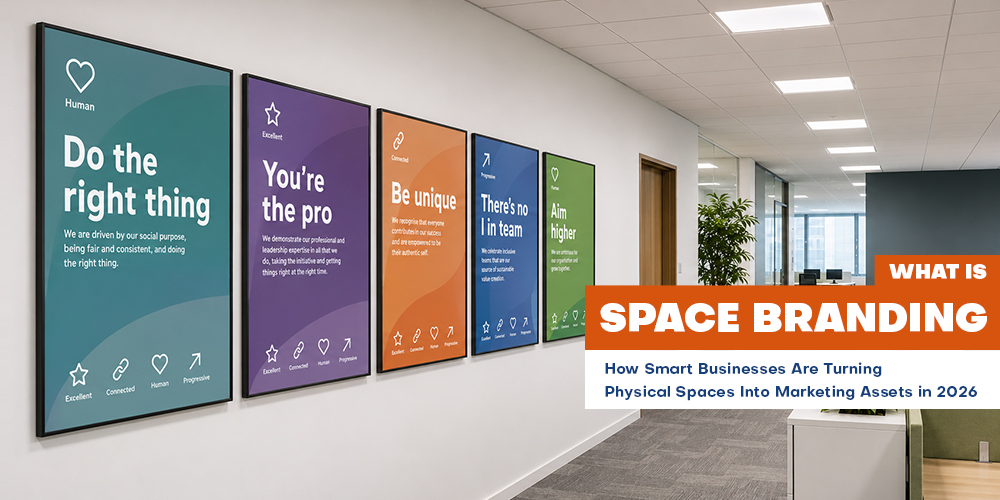
What is Space Branding? How Smart Businesses Are Turning Physical Spaces Into Marketing Assets in 2026


In 2026, customers don’t just buy products or services — they buy experiences. Before someone speaks to your sales team, scans your brochure, or visits your website, they silently judge your brand through your physical environment.

Your office, showroom, exhibition stall, clinic, café, or retail store has now become a live marketing channel. And businesses that understand this are building stronger trust, better customer engagement, and higher brand recall than competitors who still treat their spaces as “just interiors.”

This is where Space Branding changes the game.

At Bright Pixel, we help brands transform ordinary walls, workspaces, and event setups into immersive brand experiences that communicate professionalism, creativity, and authority instantly.

1. What is Space Branding?

Space branding is the process of designing physical environments in a way that visually and emotionally communicates your brand identity.

It combines branding, interior aesthetics, environmental psychology, storytelling, and customer experience to create a space that people remember.

Unlike traditional branding that lives only on screens or print materials, space branding allows people to physically experience your brand.

A modern branded space may include:

  • Brand-focused wall graphics
  • 3D signage and illuminated logos
  • Creative way finding systems
  • Interactive digital displays
  • Brand-inspired color psychology
  • Customized furniture and décor
  • Motivational culture walls
  • Experience zones for social sharing

The goal is simple:

Make people “feel” your brand the moment they enter the space.

Why Space Branding Matters More in 2026

Today’s audience is exposed to thousands of ads every day. Attention spans are lower, and trust has become harder to earn.

A professionally branded physical environment instantly creates:

  • Credibility
  • Emotional connection
  • Visual consistency
  • Premium perception
  • Customer confidence

Businesses are now investing heavily in experiential branding because physical experiences create stronger memory retention than digital ads alone.

A customer may forget an Instagram ad in 5 seconds. But they will remember a stunning office lobby, an immersive exhibition stall, or a creatively branded retail experience for years. Take a look at the creative branding portfolio designed by Bright Pixel and explore how we help brands transform offices, cafés, retail stores, and exhibition spaces into impactful brand experiences.

Space Branding Is No Longer “Decoration” — It’s Business Strategy

Many businesses still think space branding means adding a logo on the wall.

In reality, strategic space branding directly impacts:

  • Customer trust
  • Lead generation
  • Employee motivation
  • Social media visibility
  • Brand recall
  • Walk-in conversions
  • Client perception

Your environment silently communicates:

  • “Are you premium?”
  • “Are you innovative?”
  • “Can clients trust you?”
  • “Are you industry leaders?”

And customers decide all this within seconds.

Types of Space Branding Services Businesses Need in 2026

1. Office Space Branding

Modern offices are becoming culture and collaboration hubs instead of traditional workplaces.

Employees now expect inspiring environments that reflect innovation, energy, and purpose.

Smart Office Branding Includes:

  • Vision and mission walls
  • Motivational graphics
  • Department branding
  • Glass branding films
  • Collaborative creative zones
  • CEO storytelling walls
  • Interactive employee engagement spaces

Why It Matters:

  • Employee retention
  • Productivity
  • Company culture
  • Recruitment appeal
  • Client confidence during meetings

2. Retail Space Branding

Retail stores in 2026 are competing against online shopping.
That means physical stores must offer experiences people cannot get online.

Successful retail branding focuses on:

  • Visual storytelling
  • Customer movement flow
  • Instagrammable corners
  • Interactive product displays
  • Emotional shopping experiences

The Goal:

Turn visitors into repeat customers through memorable experiences.

3. Exhibition Stall Branding

Exhibitions are crowded and highly competitive.
If your stall looks generic, people walk past without noticing you.

Creative exhibition branding helps brands:

  • Attract footfall
  • Increase engagement
  • Generate leads faster
  • Improve recall after events

High-Converting Exhibition Branding Includes:

  • 3D illuminated signage
  • LED display integration
  • Modular branding systems
  • Interactive demo areas
  • Product storytelling walls
  • Experience-focused booth layouts

At Bright Pixel, we create exhibition branding solutions designed not just to look attractive — but to generate business opportunities.

The Psychology Behind Successful Space Branding

The best-branded spaces are designed using customer psychology.

Every element influences emotions:

  • Colors affect trust and excitement
  • Lighting affects mood and attention
  • Layout affects movement behavior
  • Visual hierarchy affects focus
  • Open spaces affect comfort levels

That’s why professional space branding is far more strategic than decoration.

It is a combination of:

  • Marketing
  • Architecture
  • Consumer psychology
  • Experience design
  • Brand storytelling

How Space Branding Increases Revenue

Businesses investing in branded environments often see:

  • Higher customer engagement
  • Better walk-in conversion rates
  • Stronger social media visibility
  • More repeat customers
  • Better employee performance
  • Higher perceived business value

A well-designed branded space becomes:

  • A marketing tool
  • A sales tool
  • A content creation space
  • A trust-building asset

Why Businesses Choose Bright Pixel for Space Branding

At Bright Pixel, we don’t create “good-looking spaces.” We create environments that help businesses grow. From offices and retail stores to exhibitions and corporate environments, we design spaces that leave lasting impressions and strengthen your market presence. Contact us today.