Showing posts with label digital marketing. Show all posts

Saturday, July 11, 2026

How to Brief a Design Agency So You Actually Get What You Want


Design Agency in Pune

You've finally decided to hire a design agency. Maybe it's a new website, a logo, or a full brand refresh. You're excited. You have a vision in your head.

Then you sit down to write the brief, and... nothing. You end up writing something like "make it modern and clean, but also stand out." The agency nods politely, disappears for two weeks, and comes back with something that's technically what you asked for — but somehow not what you wanted at all.

Sound familiar? This happens more often than you'd think, and it's almost never the agency's fault. It's usually the brief.

A good brief is the single biggest factor in whether a design project goes smoothly or turns into five rounds of "can we try it differently" revisions. Here's how to write one that actually works.

Start With the Problem, Not the Solution

Most briefs jump straight to "I want a website with a blue and white theme and a big hero image." That's a solution — and it skips the part the agency actually needs: the problem.

Instead, try explaining what's wrong right now. Is your current site outdated? Are customers confused about what you do? Is your brand invisible next to competitors? A good designer can solve a real problem in ten different creative ways. They can't do much with "make it blue."

Try this instead of: "I want a modern logo." Say: "Customers don't take us seriously because our branding looks like it's from 2010, and we're losing business to competitors who look more established."

That one sentence tells the agency far more than any color preference ever could.

Know Your Audience Better Than You Know Your Own Taste

This is the part people skip most often — and it's the part that matters most. Your personal taste and your customer's taste are two different things, and a good brief keeps them separate.

Who is this actually for? A 60-year-old business owner looking for reliability? A 22-year-old scrolling Instagram at midnight? A corporate client who needs to trust you with a six-figure contract?

Tell the agency who you're designing for, not just who you are. If you like minimal black-and-white design but your audience responds to bold, colorful, energetic brands — that's useful tension to flag upfront, not discover after the first draft.

Show, Don't Just Describe

Words like "modern," "premium," "clean," and "fun" mean different things to different people. To you, "premium" might mean gold and black. To your designer, it might mean lots of white space and a serif font.

Instead of relying on adjectives alone, gather 3–5 examples of things you actually like — competitor websites, other brands, even unrelated industries. You don't need design vocabulary. Just say what you like about each one: "I like how simple this feels," or "This color makes me feel like the brand is trustworthy."

It's just as useful to show examples of what you don't want. Sometimes ruling things out is clearer than describing what's in your head.

Set Real Boundaries: Budget, Timeline, and Must-Haves

Agencies aren't mind readers, and vague boundaries lead to vague results. Be upfront about:

  • Budget — even a rough range helps the agency propose something realistic instead of over- or under-delivering.
  • Timeline — is this urgent, or is there room to explore a few directions?
  • Non-negotiable — a specific logo that must be used, brand colors that are already locked in, a platform you're required to use (like WordPress or Shopify).

Being clear here isn't limiting the agency's creativity — it's the opposite. It stops them from spending time designing things you'll reject any way for reasons you never mentioned.

Give Feedback the Right Way

The brief isn't just the first document you send — the way you respond to the first draft is part of the briefing process too.

When something feels off, resist the urge to say "I don't like it" and stop there. Try to explain why. Is it the color? The tone? Does it not feel like "you"? Specific feedback like "this feels too corporate for how casual our brand is" gives the designer something to actually work with. Vague feedback like "something's missing" usually leads to more rounds of guessing.

The One-Page Brief Template

If all of this feels like a lot, here's the simple version. A solid brief can fit on one page and cover just five things:

  1. The problem — what's not working right now
  2. The audience — who this needs to connect with
  3. Examples — 3–5 things you like (and 1–2 you don't)
  4. Boundaries — budget, timeline, and any fixed requirements
  5. Success — what this project needs to achieve for you (more leads, more trust, more sales — be specific)

That's it. You don't need design jargon. You don't need mock-ups. You just need clarity.

The Bottom Line

A great brief isn't about having perfect design taste — it's about giving your agency enough real information to make good decisions on your behalf. The more honest and specific you are about the problem, the audience, and what success looks like, the less time you'll spend in revision rounds — and the more likely you are to end up with something you actually love.

Good design starts long before anyone opens a design tool. It starts with a good conversation — and a good brief is just that conversation, written down.
 

Wednesday, March 25, 2026

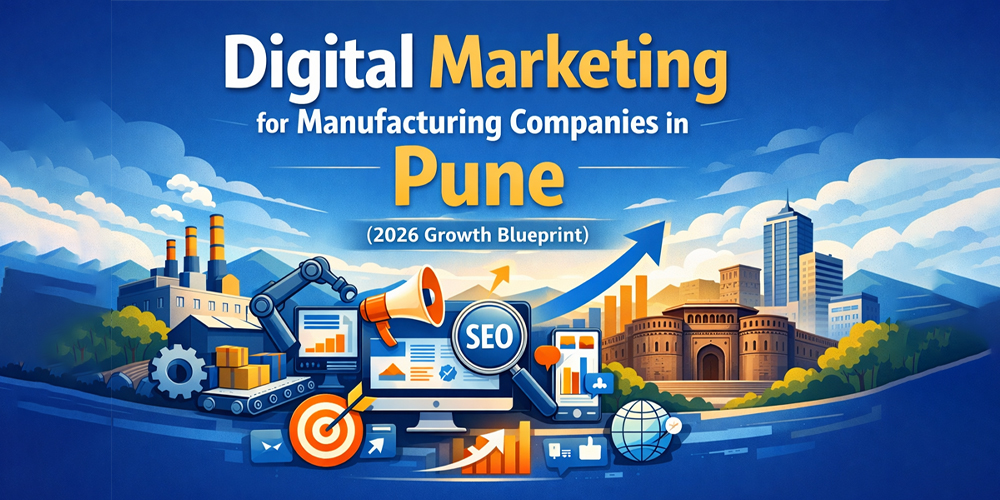
Digital Marketing for Manufacturing Companies in Pune


Manufacturing companies in Pune are entering a new digital era. Buyers no longer depend solely on trade shows, industry contacts, or cold calls to discover suppliers. Today, procurement managers, engineers, and sourcing teams start their supplier evaluation process online.

Whether they are searching for precision components, CNC machining services, or OEM manufacturing partners, the first impression of your company is usually your website and online presence.

This guide explains how manufacturing businesses can leverage digital marketing in 2026 to generate qualified RFQs, increase visibility, and expand their reach both locally and globally.

Why Modern Manufacturers Must Go Digital in 2026

Across Pune’s industrial belt — from Chakan MIDC to Talegaon MIDC and Ranjangaon MIDC — the way manufacturing businesses attract customers is evolving

Earlier, suppliers relied heavily on:

Today, industrial buyers first search online for suppliers and compare multiple companies before sending enquiries.

If your company does not appear in search results or your website does not communicate technical credibility, buyers will quickly move to competitors who present themselves better online.

In 2026, a strong digital presence is no longer optional — it is a competitive necessity.

What Digital Marketing Means for Manufacturers

Digital marketing for manufacturing companies focuses on making your business visible to decision-makers searching for industrial solutions.

These decision-makers include:

A well-executed digital strategy helps manufacturing companies:

When implemented properly, digital marketing becomes a consistent lead-generation engine for manufacturing companies.

The Core Components of an Effective Digital Strategy

1. Technical Website Design & Optimization

Your manufacturing website acts as your digital factory showroom — where buyers evaluate your capabilities before contacting you.

If the website is slow, outdated, or unclear, buyers may leave within seconds.

Key elements of a high-performing industrial website include:

A well-designed website builds trust and professionalism before the first conversation even begins.

2. Industrial SEO: Get Found for Intent-Based Searches

Many manufacturing companies make the mistake of targeting generic keywords like “engineering company”.

However, industrial buyers search using specific technical queries.

Examples include:

Industrial SEO focuses on optimizing your website for these high-intent keywords so your company appears when buyers actively search for suppliers.

Technical SEO also includes:

These factors help search engines and AI systems understand your content and rank it effectively.

3. Content Marketing for Industrial Buyers

Industrial buyers research extensively before selecting suppliers. They prefer companies that demonstrate technical expertise and industry knowledge.

Content marketing helps establish this credibility.

Effective manufacturing content includes:

This type of content builds trust with buyers and authority with search engines.

B2B Lead Generation Channels That Work

LinkedIn and Professional Networks

Platforms like LinkedIn have become powerful channels for B2B manufacturing visibility.

Procurement heads, engineers, and sourcing managers often use LinkedIn to:

Sharing project highlights, factory updates, and technical insights can significantly increase visibility among relevant decision-makers.

LinkedIn and Professional Networks

Pay-per-click advertising allows manufacturing companies to appear instantly for high-intent searches.

Examples of search queries include:

While SEO builds long-term visibility, PPC provides immediate exposure and faster lead generation.

A combination of both creates a balanced growth strategy.

The Role of Video in Manufacturing Marketing

Industrial buyers often prefer to see production capabilities before initiating discussions.

Videos that demonstrate manufacturing processes can significantly increase engagement.

Examples of effective video content include:

Visual transparency builds trust and gives buyers confidence in your capabilities.

Local SEO for Manufacturing Companies in Pune

Many industrial buyers prefer suppliers located within key manufacturing clusters.

Optimizing your website for industrial areas such as:

helps your company appear in location-specific industrial searches.

Local SEO can drive enquiries from nearby manufacturing companies looking for suppliers or subcontractors.

Measuring Success: Key Metrics for Manufacturers

To understand whether your digital marketing strategy is working, track these important metrics:

Tracking these metrics helps improve marketing efficiency and provides valuable insights into buyer behaviour. Get Free SEO Audit for Your Website

AI and SEO in 2026: What Manufacturers Should Know?

Search engines are increasingly powered by AI-driven systems that prioritize structured, high-quality, and informative content.

To improve your chances of appearing in AI-generated search summaries:

These practices help search engines interpret and display your content more effectively.

How Bright Pixel Helps Manufacturing Companies Grow

At Bright Pixel, we specialize in digital marketing strategies designed specifically for industrial and manufacturing businesses.

Our services include:

We help manufacturing companies transform their online presence into a powerful engine for consistent industrial enquiries.

Request a free website and SEO audit today and discover how your manufacturing business can grow online.