Thursday, January 29, 2026

From Screen to Store: Utilizing Space Branding to Transform Your Physical Business


Introduction: The Criticality of Consistency

Did you know that 60% of consumers avoid brands whose marketing feels inconsistent, even if they like the product?

This statistic reveals a critical disconnect: in today's digital-first world, your website and social media are your first handshake, yet your physical space is the ultimate test of your brand's integrity. If the sleek, modern vibe of your café's Instagram doesn't match the cluttered reality of your dining room, or if the cutting-edge aesthetic of your IT company's website clashes with a drab, uninspiring office lobby, you're not just losing ambiance—you're losing trust and business.

Welcome to the strategic imperative of Space Branding. We’re not talking about hanging a poster; we’re talking about intentionally transforming your physical environment into a three-dimensional extension of your digital identity. As experts in design, development, and marketing, we understand that true success comes from this seamless integration.

This guide will show you how to move your brand’s personality from the 2D "Screen" into the tangible "Store" (whether that’s a restaurant, office, or retail space), ensuring a unified experience that drives word-of-mouth, enhances loyalty, and naturally boosts your online visibility through shareable moments.


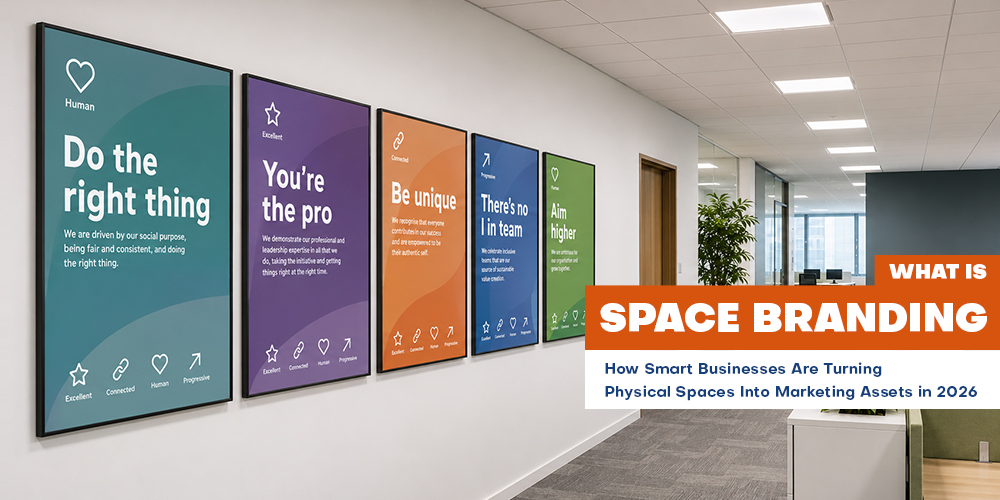
What Is Space Branding?

Space branding is the art and strategy of visually expressing your brand identity through your physical environment. It involves designing your space — whether it’s an office, store, café, or vehicle — to tell your brand story, create emotional connection, and reinforce brand values.

Take a look at our portfolio to see how we’ve helped businesses transform their spaces into powerful brand experiences.

1. Translating Your Digital Identity to 3D

The foundational step of space branding is ensuring that the visual elements you meticulously crafted for your website and marketing materials are accurately and powerfully represented in your physical location.

Overview: This process is about converting your digital style guide—colors, typography, and logo usage—into tangible architectural and design features, creating instant, recognizable brand recall the moment a customer steps inside.

·       Color Palette Consistency (Hex Codes to Hues):

o       Map your primary and secondary brand colors directly to physical materials (paint, lighting gels, furniture upholstery).

o      Example for a Café: A vibrant, digital-native coffee brand's neon accent color must appear in its physical signage or furniture to link the two experiences instantly.

·       Typography in the Environment:

o        Use your brand fonts for all physical signage, menu boards, and wall graphics. Consistency here prevents a jarring visual shift.

o       IT Company Example: If your brand font is clean and modern, use large, legible cuts of it in your lobby or meeting room names.

·        Logo and Iconography Application:

o        Go beyond simple signage. Integrate your logo's key shapes or iconic motifs into design elements like     wallpaper patterns, floor inlays, or custom lighting fixtures.

o        Food Industry: Use your logo's shape as the cut out for packaging or custom trays.

·         Brand Voice in Signage:

o        The language and tone used on your website should dictate the style of all physical text, from restroom     signs to mission statements on the wall.

o        Example: A playful, youthful brand should use fun, witty language; a professional bank should use     concise, authoritative text.


2. Strategic Space Planning: Enhancing the Customer Journey

A successfully branded space guides the visitor's experience, turning a simple visit into a memorable brand interaction.

Overview: This section focuses on using the physical layout and specific design features to control the customer flow, manage expectations, and create moments specifically designed for social sharing.

·         The "Hero Image" Entry Point:

o        Treat your entrance or lobby as the "hero banner" of your website. It must immediately capture the brand essence and welcome the visitor.

o        Restaurants & Cafés: A strategically placed, well-lit counter or a striking feature wall (often with the brand name) is key for this first impression.

·         Creating "Instagrammable" Moments (UGC Generators):

o        Design specific, highly photogenic areas (a unique wall mural, a branded neon sign, specialized lighting). When customers take photos, they are effectively generating free, high-quality content that links the physical location to your online brand, directly improving your online visibility.

·         Way finding and Flow:

o        For IT offices, design your layout to reinforce your values. Open, collaborative spaces communicate transparency; clear, well-marked departments communicate organization.

o        For Food Industry, the flow from order point to pickup, or from entrance to table, should be intuitive, removing friction and aligning with your brand's promise (e.g., fast-casual flow vs. fine-dining leisurely path).

·         Product/Service Display Zoning:

o        Use distinct branding elements (different lighting, materials) to clearly segment different service areas—like a waiting area versus a presentation room in an office, or a retail shelf versus a tasting counter in a food store.


3. The Sensory Toolkit: Branding Beyond the Visual

While visuals draw them in, it's the non-visual, sensory elements that forge a deep, lasting connection with your brand, ensuring your business is not just seen, but felt.

Overview: An often-overlooked area, this involves curating sound, scent, touch, and even taste to reinforce the brand personality and create an atmosphere that resonates long after the customer leaves.

·        Curated Auditory Experience (Sound Branding):

o        Your background music must match your brand's energy. A modern tech start-up might use upbeat     electronic or instrumental music; a cozy café needs soft jazz or acoustic tracks.

o        Avoid generic playlists; create one that reinforces your specific brand tone.

·         Tactile and Textural Consistency:

o        The materials your customers interact with (furniture, menus, counter surfaces) must convey quality     and align with your price point and brand ethos.

o        Example: Using natural wood and linen conveys an organic, sustainable brand; polished steel and glass  convey premium, high-tech luxury.

·         Scent Marketing:

o        A unique, subtle scent can create powerful memory links. Many retail brands use custom signature scents.

o        Food Industry: Beyond the smell of the food, consider a clean, branded scent for the entrance or restrooms to control the overall impression.

·         The Human Element (Staff as Brand Carriers):

o        Staff uniforms, demeanor, and service protocols are the final, living elements of your space branding. They must embody the brand's promised experience.


Conclusive Summary

The screen and the store are two sides of the same coin: your brand. Inconsistent experiences erode trust, but seamless Space Branding builds a powerful, unforgettable presence. By intentionally translating your digital identity, optimizing your space flow, and curating the sensory experience, you transform your physical location from a static business into a dynamic brand asset.

This transformation doesn't just make your space look better; it actively generates buzz. Great space branding leads to better photos, more check-ins, positive reviews, and a greater number of geo tagged social media posts—all of which dramatically improve your online visibility and generate more business.

Your Challenge: This week, audit your main service area and identify one sensory element (sound, texture, or scent) that currently conflicts with your website's brand identity. Fix it, and observe the immediate change in atmosphere and customer mood.

Ready to stop guessing and start creating a holistic brand experience? Contact Bright Pixel today for a comprehensive Space Branding audit and design plan to make your physical business as impactful as your digital presence.

Expert Insight

At Bright Pixel, we bring over a decade of hands-on experience in brand design, web development, and marketing strategy for businesses across Pune. Our team has successfully executed space branding and digital identity projects for cafés, IT companies, and retail brands, helping them create cohesive, high-impact customer experiences.


We combine design psychology, digital strategy, and local business insight to help brands move seamlessly from online presence to physical identity — building consistency, trust, and measurable growth

Saturday, January 17, 2026

How to Create High-Converting Ad Creatives


 Running ads today is not difficult. Anyone can launch a Facebook or Instagram campaign in minutes. The real challenge is getting people to stop scrolling, pay attention, and actually take action.

That’s where ad creatives make all the difference.

At Bright Pixel, we’ve worked with businesses that are very different from each other—scrap dealers, pottery and ceramics brands, sofa manufacturers, and more. Despite the variety, one thing stays consistent: ads that convert are never random. They’re built with intent, clarity, and a deep understanding of the customer.

In this blog, we’ll walk you through how high-converting ad creatives are created and share real examples from our live campaigns across Facebook, Instagram, and WhatsApp.

What Makes an Ad Creative “High-Converting”?

A high-converting ad creative isn’t just about attractive visuals or trendy design. It’s about communication. The best-performing ads combine the right message, the right format, and the right emotion at the right moment.

In simple terms, a good ad answers one question immediately:

“Why should I care?”

When a user sees your ad, they should instantly understand what you offer, how it helps them, and what they should do next. If any of these elements are missing, conversions drop—no matter how good the design looks.

Start With the Audience, Not the Design

Before we design anything at Bright Pixel, we spend time understanding the audience. This step alone separates converting ads from average ones.

We ask:

  • Who is the ideal customer?
  • What problem are they trying to solve?
  • What hesitation or doubt might stop them from taking action?

When ads are created without this clarity, they may get likes or views, but they rarely generate leads or sales. Conversions happen when the message feels personal, not generic.

Choosing the Right Ad Format Matters

In most industries we work with, video ads consistently outperform image ads, especially on Facebook and Instagram.

Videos work because they:

  • Build trust faster
  • Explain services or products clearly
  • Hold attention longer than static images

That doesn’t mean image ads are useless—but if your goal is conversions, video should always be tested first.

Real Campaign Examples From Bright Pixel

1. Scrapping Business: Turning an “Offline” Industry Into Digital Leads

The challenge:

Scrapping businesses usually rely on word of mouth or local contacts. Our client wanted real enquiries, not just online visibility.

Our approach:

We created short, straightforward videos showing the actual process:

  • Types of scrap they accept
  • On-site pickup in action
  • Assurance of fast and fair payment

The creatives used simple text overlays like:

  • “We Buy All Types of Scrap”
  • “Instant Pickup | Best Rates”

The call-to-action was clear and direct: Call Now or WhatsApp Now.

vaahan recycle

The result:

The video ads generated strong engagement and consistent enquiries. More importantly, the cost per conversion was significantly lower than image-based ads.

Why it worked:

The creative removed trust barriers instantly by showing the service in real life. No over-promising—just clarity.

2. Pottery & Ceramics Brand: Driving WhatsApp Conversations

The challenge:

This brand didn’t want website traffic. They wanted direct customer conversations.

Our approach:

We focused on close-up product videos that highlighted:

  • Texture and finish
  • Handcrafted quality
  • The premium feel of the pottery

The copy was minimal and warm:

  • “Handcrafted Pottery for Every Space”
  • “Message Us on WhatsApp”

We ran these as WhatsApp conversion ads through Facebook and Instagram.

The result:

The brand received high-quality WhatsApp enquiries, faster buying decisions, and better response rates than traditional lead forms.

Why it worked:

WhatsApp removed friction. Customers could ask questions, see catalogues, and place orders instantly—no waiting, no confusion.

3. Sofa Manufacturer: Attracting Serious Buyers With Lead Ads

The challenge:

The client wanted genuine buyers, not casual browsers.

Our approach:

We created video creatives showcasing:

  • Sofa designs and styles
  • Fabric options
  • Comfort, build quality, and finishing

Strong hooks were used early in the video:

  • “Factory Direct Sofa Prices”
  • “Custom Designs Available”

The CTA focused on enquiries and showroom visit bookings.

The result:

The campaign delivered high-quality leads with clear purchase intent and a lower cost per lead compared to generic ads.

Why it worked:

Sofa buyers care about value and customization. The creative spoke directly to those needs.

Hooks That Consistently Drive Conversions

Across industries, we’ve noticed certain hooks perform exceptionally well when used correctly. A few examples include:

  • “Factory Direct – No Middlemen”.
  • “Custom-Made as per Your Requirement”
  • “Limited-Time Offer”
  • “Fast Pickup | Instant Response”
  • “Message Us on WhatsApp”

The first 3 seconds of your ad matter more than anything else—especially for video. If the hook doesn’t land, the user scrolls away.

Clear Call-to-Action = Better Results

Even the best creative will fail if the user doesn’t know what to do next.

Some of our highest-performing CTAs include:

  • Call Now
  • WhatsApp Us
  • Get a Quote
  • Book a Free Consultation
  • Send Enquiry

The CTA is always chosen based on the customer journey, not randomly. For example, high-ticket products often need enquiries, while services benefit from direct calls or WhatsApp chats.

Common Mistakes That Kill Conversions

We often see businesses struggle with ads because of a few avoidable mistakes:

  • Too much text in one creative
  • Generic stock images that don’t build trust
  • No clear CTA
  • Wrong audience targeting
  • Prioritising design over message

At Bright Pixel, we design creatives for performance first, aesthetics second.

Why Creative Quality Matters More Than Ad Budget

A strong creative can outperform a high-budget campaign with weak messaging. Even with limited spend, the right ad creative can:

  • Lower your cost per lead
  • Improve ROI
  • Increase engagement
  • Generate consistent enquiries

On the flip side, poor creatives with a big budget only waste money.

Final Thoughts

High-converting ad creatives are never accidental. They are built on strategy, audience understanding, and continuous testing. Our experience with scrapping businesses, pottery brands, and sofa manufacturers proves that customised creatives always outperform generic ads.


If you want ads that don’t just look good but actually convert, your creative strategy deserves serious attention.

Ready to Create Ad Creatives That Actually Convert?

Whether you’re a local business, manufacturer, or service provider, Bright Pixel helps brands create ad creatives that deliver real results—not just impressions.

Get in touch with us today to scale your Facebook, Instagram, and WhatsApp ad campaigns.

Visit https://brightpixel.in/ to learn more.